When evaluating real estate in Montgomery County, transportation logistics often drive the final purchasing decision. Buyers looking at this area quickly realize that proximity to major employment centers dictates both daily convenience and long-term property values.
Understanding the exact commute times from Bethesda, MD is essential for anyone planning a move to the Washington Metro region this year. Whether you plan to drive the Capital Beltway or rely on the Red Line, knowing the current transit landscape will help you choose the right neighborhood for your daily routine.
Understanding the Bethesda Commute Landscape in 2026
The daily commute to work for Bethesda residents averages between 28.9 and 31.4 minutes, which aligns closely with broader Montgomery County averages. This baseline provides a helpful starting point, but individual experiences vary wildly depending on your exact location and mode of transit.
Major road networks like the I-495 Capital Beltway and the Wisconsin Avenue corridor carry the bulk of local vehicle traffic. Navigating these arteries requires some strategic planning, especially as typical rush hour patterns continue to evolve throughout the week.
Interestingly, local traffic congestion has shifted noticeably since over 36% of Bethesda residents now utilize work-from-home or hybrid setups in 2026. Buyers should focus less on historic gridlock and more on how their specific weekly schedule aligns with current mid-week traffic peaks.
Driving Times to Major Regional Employment Hubs
For those who prefer to drive, travel times depend heavily on whether you are heading into the urban core or taking a reverse commute. Here is a breakdown of what to expect when driving to key commercial centers in MD, DC, and VA.
-
Downtown DC: Expect a 20 to 35-minute drive during peak morning hours.
-
Tysons Corner and Arlington: Budget 25 to 45 minutes, depending heavily on Beltway traffic and high-occupancy vehicle lane access.
-
Rockville and Gaithersburg: This reverse commute typically takes a breezy 15 to 25 minutes.
While these estimates account for standard delays, an unexpected fender bender on the Beltway can easily add twenty minutes to your morning. Relying solely on a car means you must build a buffer into your daily schedule.
Public Transportation Options: Riding the Red Line and Beyond
Bethesda boasts a robust public transit infrastructure, anchored primarily by the Washington Metro system. The Bethesda Metro Station and the Medical Center Station provide direct, reliable access to the Red Line.
Riding the Red Line remains the most efficient way to reach Downtown DC or connect to Union Station without the stress of navigating downtown parking. However, transit riders need to be aware of the WMATA Red Line summer 2026 disruption running from July 6 through September 6, which will affect stations between North Bethesda and Friendship Heights.
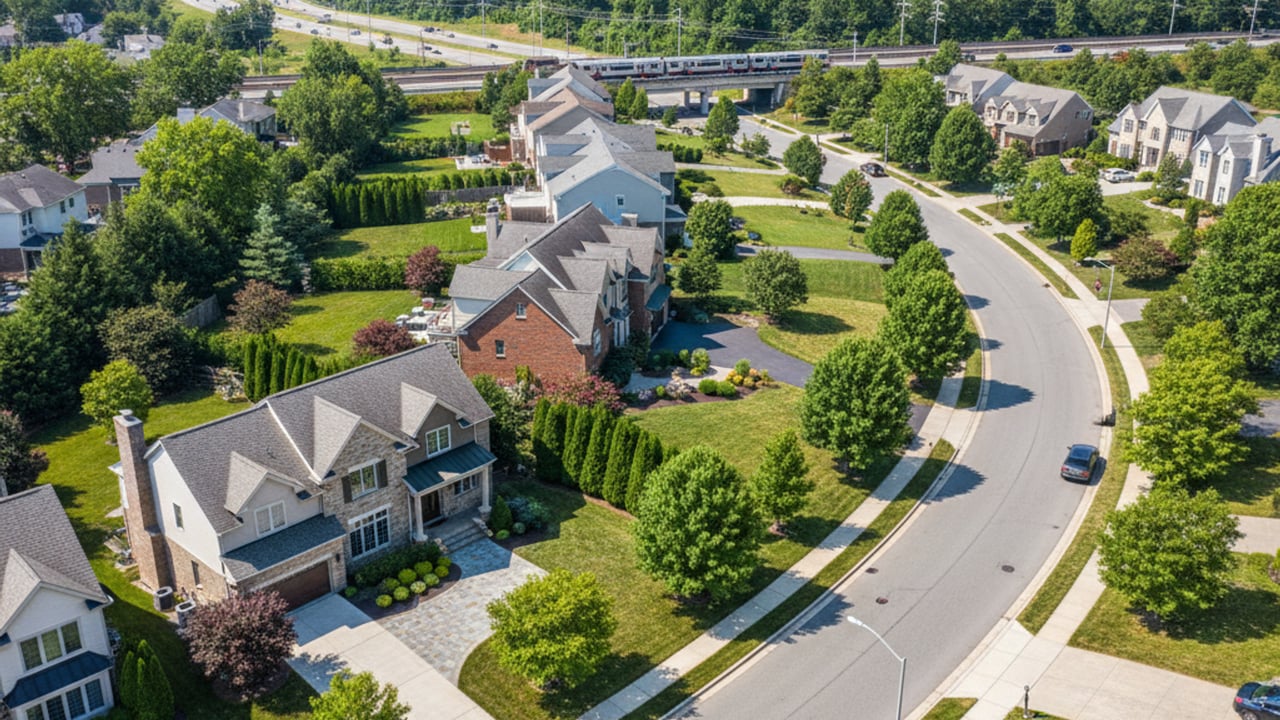
Looking ahead, the transit landscape will expand significantly with the Purple Line light rail, which is currently under construction and targeting a Winter 2027 opening. For buyers making long-term real estate investments, purchasing near these future transit hubs offers excellent potential for sustained property value growth.
Bus Routes and Supplemental Transit
Not every residential street sits within a comfortable walk of a Metrorail station, which is where local bus networks become invaluable. The Montgomery County Ride On bus system effectively bridges this gap, connecting outlying residential areas directly to major transit hubs.
Multiple local routes serve the Woodmont Triangle and suburban corridors, ensuring that even homes farther from the urban center maintain strong transit connectivity. Additionally, commuter buses provide convenient links to nearby MARC train stations for extended regional travel.
Active Commuting: The Capital Crescent Trail and Walkability
Non-motorized transit has become a massive draw for buyers prioritizing health and environmental sustainability in their daily routines. The Capital Crescent Trail serves as a primary artery for bicycle commuters heading toward Georgetown and downtown DC.
With the trail's reconstruction targeted for completion in summer 2026, cyclists will soon enjoy an even smoother, uninterrupted ride into the city. Living near this trail is a major real estate perk that often offsets the need for a second vehicle.
Central Bethesda also offers exceptional walkability for those employed at major local campuses like the National Institutes of Health and Walter Reed Army Medical Center. Extensive neighborhood pedestrian infrastructure and dedicated bike lanes make navigating the area on foot both practical and efficient.
How Transit Access Influences Bethesda Real Estate
There is a direct and undeniable correlation between a property's distance to transit and its market price. Walking distance to a Metro station commands a significant premium, fundamentally shaping the types of housing available in different parts of the city.
In 2026, the median home value in Bethesda hovers between $1,250,000 and $1,460,000, but these numbers fragment quickly based on property style. Condos near the urban center typically range from $300,000 to over $500,000, offering a lower barrier to entry for buyers who prioritize immediate Metro access.
Conversely, single-family homes in the surrounding residential areas generally price out between $900,000 and $2,000,000 or more. Buyers must carefully weigh the higher property taxes and HOA fees of the urban core against the tangible financial savings of a shorter, car-free commute.
Frequently Asked Questions
Is the commute terrible for living in DC and working in Bethesda?
No, this reverse commute is generally quite manageable compared to traditional inbound traffic. Driving from DC to Bethesda typically moves against the heaviest congestion, and taking the Red Line outbound is reliable and fast. Expect travel times of around 20 to 30 minutes, depending on your exact starting point in the district.
Is there a train from Bethesda to Baltimore?
There is no direct train from Bethesda to Baltimore, but the connection is straightforward. Commuters typically take the Red Line to Union Station in DC, where they can transfer to a MARC or Amtrak train heading north. The total trip usually takes about 90 minutes from station to station.
What is considered a reasonable commute time in the Bethesda area?
A reasonable daily commute in this market is generally considered to be around 30 minutes. This aligns perfectly with the local average of 28.9 to 31.4 minutes for Bethesda residents. Anything under 20 minutes is considered exceptionally short for the Washington Metro region.